Showing posts with label family. Show all posts

Wednesday, July 22, 2026

Cursed Daughters by Oyinkan Braithwaite

“If you cannot respect this family and this function, at least respect yourself.”

"Cursed Daughters" is a story of generational trauma, following the lives of several Nigerian women of the same bloodline. The story is deeply entrenched in what it is like to be a woman and to have those gender expectations placed upon you. As the title suggests, there is a spiritual element to the story, mystifying their experience into something worth awing at.

I found this book entrancing as it jumped between the perspectives of the women. It follows a very nonlinear story pattern, jumping across years, but stays very coherent all the way through. The information provided in the past provides context to the present, and vice versa. It is an art in writing.

Give this book a try and leave your thoughts. The library's Black Author Book Club is meeting on Wednesday, July 29th (2026) to discuss the book, so come on out! If you liked this book, try Oyinkan's other book "My Sister, the Serial Killer"!

- Leo

Friday, July 3, 2026

Riding Magic by Kelly Starling Lyons

 While the gorgeous illustrations in this brief, impactful book are reason enough to savor it, it also illustrates an important life lesson. In it, an adolescent girl from a family of horseback riders overcomes mixed feelings about learning to ride, resulting in a significant developmental milestone.

There is one horse Dom loves to spend time with in her uncle's barn, but she is afraid to ride horses, and she envies the ease with which the other family members do it. It takes the better part of a summer, but after gentle encouragement from her uncle, mother and older sister throughout the summer, she has an unusual dream one night that finally enables her to push through her ambivalence and out of her comfort zone. 

Then, wow! What joy she feels on her first ride! There is no going back. Dom's confidence in herself soars. Her world and her self perception have changed irreversibly; she knows that she and the horse she has been building a friendship with all summer in the barn have now crossed through a special portal. "We can do anything. Even fly through the sky" - she thinks. 

This is a book to inspire readers of any age to try that thing they are longing - but afraid - to do, and to experience the exponential growth in self agency and self esteem that can result.

- Marianne W.


Monday, April 27, 2026

Necessary Fiction by Eloghosa Osunde

    Necessary Fiction is a story of stories taking place in Lagos, Nigeria all centering around a group of queer individuals. Queerness is something still somewhat taboo in Nigeria, so to see the community, love, and experiences of the group is a beautiful spectacle. Some of the stories even involve a more spiritual component, pulling from Nigerian myth and lore.
    The book scurries across multiple perspectives while also juggling nonlinear storytelling, often going back in time. Each chapter follows a different person within the group, with some being revisited after time has passed.
    I think this book was entertaining, but longer than it needed to be. Some of the sections could've been reduced or didn't need to be there, but were still compelling nonetheless. Some of the characters also seemed to try very hard to seem interesting, which given the circumstances, I kind of understand. But my biggest gripe was the fact that many of the parents of the queer folks.... were also queer? Almost all of them. I found that very strange.
    All in all though, the book was engaging and beautiful, with the primary luster coming from the love woven between the relationships, until it becomes a manifestation within the self. Check this book out if you're looking for any queer black stories, especially those of African origin!
- Leo


Thursday, April 2, 2026

Lost Lambs by Madeline Cash

After Catherine unilaterally decides to open her marriage, the Floyd family descends into chaos, involving multiple over-the-top scandals, each fit for an episode of a zany tv show. 

With its rapid fire wit and colorful characters in a harbor town, this family comedy shares DNA with the cartoon Bob's Burgers. The father fumbles his good intentions, the fabulous mother loves her booze, the daughters are fearless, wacky, and brilliant. There's even a larger-than-life billionaire villain. One of the side characters I loved was "War Crimes Wes," the veteran boyfriend of the eldest daughter who is a staunchly adoring man with no imagination and something like Crohn's Disease, which gives him a pained stoicism everyone immediately respects. Each chapter focuses on the perspective of one character, usually rotating among the family members, but including others, like Wes. 

Though the Floyds share a house, they each live largely separate lives. It is satisfying and lovely to see how they meet up in the end in a patchwork sort of way that affirms what a healthy family looks like. 

-Michael G. 


Thursday, August 7, 2025

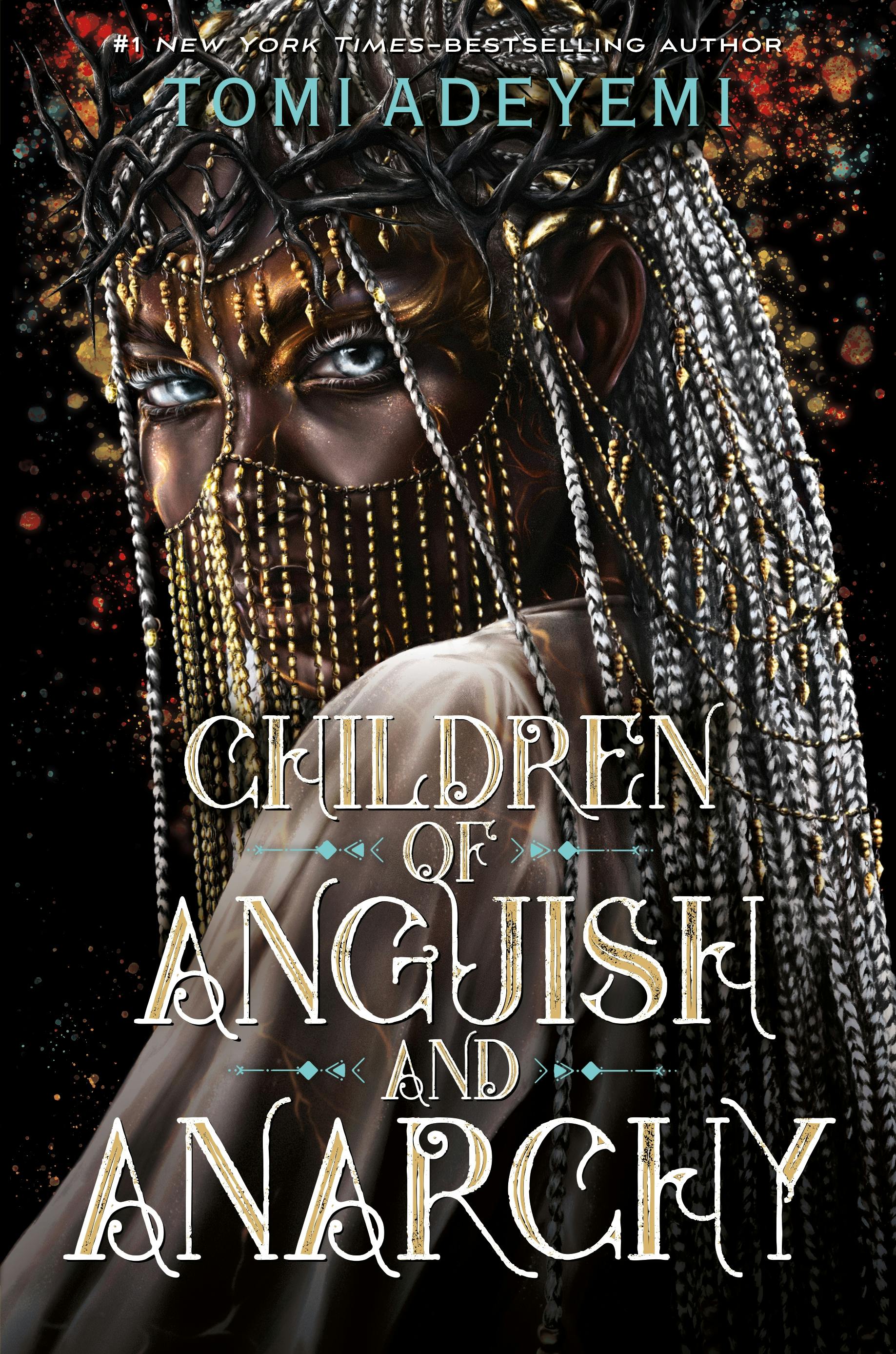
Children of Anguish and Anarchy by Tomi Adeyemi

“I teach you to be warriors in the garden, so that you may never be gardeners in a war.”

A quote that sums up beautifully much of the meaning behind the trilogy's events. The hardship and strife of the Orïshans paved the way for a new, even stronger, generation. 

This story continues from the last with a chilling twist that there is an enemy larger than the conflict between tîtáns and maji. We always knew the world was bigger than Orïsha, but the thought that that world would close in on them was something never fully considered. We see this nightmare in its entirety as Zélie and all the others were kidnapped and thrown onto a ship steered by men who only crave carnage, power, and domination. Working together to overcome the Skulls is the only way for survival. 

This books ramps up the scope and scale of all the conflict that we've seen within the trilogy thus far. Along with it, we see the heightened struggles of our main characters as they are pushed to their lowest points yet. We sit with them as they see what a truly united civilization could be like, and just how far their own has yet to go. All the while the constant threat of all civilization looms, with Zélie right in the center.

For me personally, it aroused thoughts of what could really unite a civilization. Thoughts to truly see that those around us are also those we need, we must be willing to be vulnerable and honest. Thoughts that that very same willingness won't come unless people are pushed to the brink. And that sometimes, what is needed is a common goal. I mean, would you work with those you despise to overcome the one who threatens you all? What other choice do you really have? 

- Leo

Monday, July 21, 2025

Two Poets - Frank X Walker and Mosab Abu Toha

When I mentioned to coworker Michael - who was putting together a poetry exhibit at the library - that there were a couple of recently published books of poetry that I had found 'harrowing,' he raised an eyebrow at the word I used and suggested reviewing the books here.  

It is an apt word for the poems in these two books. The poems, based on fact, are full of bitter tales of family separation and longing, loss and displacement, and scenes of annihilation of people and places. Coming to terms with the daily threat of death before you have barely had a chance to experience life is an overall theme in each book.

Poets Frank X Walker and Mosab Abu Toha are from ethnic groups whose people have been viewed throughout history as disposable, and while the contexts of these two poetry collections are different in place and time, the themes expressed have such strong parallels that it made sense to review them together. One collection is set in the context of the American Civil War and the other in present day Palestine. 


Walker, a professor of English at the University of Kentucky and a former Poet Laureate of the state, has published 13 books of poetry. His poems often focus on specific historical events. His latest is called Load in Nine Times and draws on actual events while imagining the thoughts and emotions of Black Civil War soldiers and their families. These carefully composed poems give us a view of the horrors endured by men who eagerly signed up for soldiering in the Union army in exchange for the commonly understood expectation of emancipation from slavery for themselves and their wives and children. 

Walker often does many months of research on a historic event before writing a poem about it, and several of the poems in Load in Nine Times imagine the thoughts of real people whose stories he found in archival records. The horrors described take time to emotionally digest, and these poems often left me feeling haunted. The two poems "Unsalted" and "How Salt Works" are about the 1864 massacre by Confederate soldiers at Saltville, Virginia of 46 Black soldiers who had been inadequately armed for battle and then abandoned on a muddy, freezing battlefield by order of their commander after they had been wounded. Other poems describe equally depraved behavior by commanding officers of both armies.

The poems reveal that like so much else in the American story, the military experience was much worse for Blacks than for white soldiers. And yet I was left with the impression that this terrible experience of going into battle with all its terrors and risk was still preferred to remaining enslaved. This series of poems provides such a close look at our gruesome history that the book felt a bit sacred to me once I had finished it; there is deep respect due to the people who suffered these experiences. At the back of the book, a timeline of Civil War developments and turning points plus several pages of notes discussing specific events that inspired some of the poems provide a helpful interpretive context. 


Forest of Noise is a collection of poems by 32-year-old Palestinian writer Mosab Abu Toha. His poems have been published in The New Yorker, The Atlantic, The Nation, The Paris Review, The Los Angeles Review of Books, and many other periodicals. He has won several prizes for his poetry. Like most Gazans, Toha has lost numerous family members, neighbors and lifelong friends who have been killed in the onslaught of retaliation by the Israeli Defense Forces in response to the October 7, 2023 Hamas attack on Israeli civilians. He, too, writes of bereavement, longing and unfathomable destruction of the people and community he has known all his life. So many people are missing from the world he knew that he writes of "Frying pans [that] miss the smell of olive oil. Clotheslines everywhere pine for soap scent," the doorknobs missing the touch of human hands and the ubiquitous rubble where the homes, olive and orange tree groves, and gathering spots of family and friends used to be. Like Walker, Toha brings you right into the immediacy of deep grief and it stings. 

Here are some lines from his poem "Under the Rubble," which I first read in The New Yorker, before I knew who this poet was:


       In Jabalia Camp, a mother collects her daughter's 

       Flesh in a piggy bank, 

       hoping to buy her a plot

       on a river in a faraway land.


       A group of mute people

       were talking sign.

       When a bomb fell, 

       they fell silent.


       The scars on our children's faces

       will look for you.

       Our children's amputated legs

       will run after you.


       He left the house to buy some bread for his kids.

       News of his death made it home,

       but not the bread.


       A father wakes up at night, sees

       the random colors on the walls

       drawn by his four-year-old daughter.


       The colors are about four feet high.

       Next year, they would be five.

       But the painter has died

       in an air strike.


       There are no colors anymore.

       There are no walls. 


       Where should people go? Should they

       build a big ladder and go up?

       But heaven has been blocked by the drones

       and F-16s and the smoke of death. 


...Even our souls,

they get stuck under the rubble for weeks. 


These are important books at a time when American history is being suppressed, erased and deceptively revised, and when the people of Palestine are feeling abandoned by the whole world as the entire population of Gaza continues to be under relentless assault, and profiteers wait for a chance to redevelop the places Palestinians call home. These two collections of poems are treasures. 

- Marianne W.

Wednesday, June 11, 2025

Children of Virtue and Vengeance by Tomi Adeyemi

“You carry all of us in your heart. We shall live in every breath you take. Every incantation you speak. You are the children of the gods. You shall never be alone.”

The words reverberate through the entirety of this story as a lesson learned and a lesson shared. 

A continuation of "Blood and Bone", "Virtue and Vengeance" follows Zélie, Amari, and Tzain as the tension of the war in Orïsha continues to rise. The king is now dead, but with the return of magic, there is now the new threat of tîtáns, people who are half kosidán half maji and wield uncontrollable power. The biggest threat of them all, is the queen.

The book continues with its signature shifts in perspective each chapter, continuing to follow Zélie, Amari, and Inan, each following their own beliefs in how they can end the war. As the title suggests, vengeance and grief are large themes in this book. We see the toll war takes on each one of the characters, and how that grief (or their attempts to prevent it) can motivate the characters to do actions that blur the lines of morality. 

Family, community, and love. This book explores the lengths we're willing go to protect them.. and to avenge them. As I listened to this story, I was completely immersed in the world and invested in these characters. And now, I'm speeding through the third book! I highly encourage checking out this series, hoping that you will fall in love with it too, just like I have. 

- Leo H.

Monday, May 12, 2025

The Most by Jessica Anthony


This 2024 novel is a quickly and easily read fiction piece that might be considered a novella. There is nothing excessive in this 133-page, richly told story. Every informative word seems carefully chosen and assembled with an almost poetic quality. I was drawn by its cover descriptions including: "The Most charges the air like a thunderclap," and "a novel of ruthless beauty." The title refers to a tennis maneuver, the relevance of which is a key part of the story. 

It's set in the mid-century. Virgil and Kathleen Beckett are just out of a New England university and newly married (a commitment perhaps made too soon). There is solid affection between them but each has secrets, each makes mistakes, and neither is emotionally mature enough to resist committing numerous indiscretions in the early years of their marriage, that each keeps hidden from the other. Virgil married for love; Kathleen more for convenience. Therefore she has the upper hand in some ways. But like so many women of that era, she did not get from marriage what she thought she had bargained for. 

As a character, Kathleen could have been drafted from  the societal issues explored in Betty Friedan's 1963 classic The Feminine Mystique: A woman driven slightly mad on occasion by the social and professional limitations of her life. Her disturbance is expressed now and then by just-so-slightly erratic behavior. The author connects the dots of Kathleen's life to explain an episodic behavioral deviance that sometimes embarrasses and exasperates the seemingly conventional husband who otherwise adores and deeply admires her. 

Oddly, in an era of post-war prosperity in the United States, these two university-educated people seem held back from achieving the economic promise of their time. In their mid-30s, they don't have much to show for their comparatively privileged positions in the world. Former college tennis champion Kathleen has a more ambitious, driven character than her laid-back husband, but in the cultural and economic milieu of that era there is little she can do to improve the sometimes depressingly dingy conditions in which she, Virgil, and their two young sons live. 

This is the intriguing part: within this story's framework there is something sinister lurking between the lines. This marriage feels like a sham. Neither Kathleen nor Virgil has completely shaken off the reverberations of their past indiscretions. It feels all along as if the chickens of husband and wife are going to come home to roost in some terrible way that destroys everybody. And yet, at the end, the tables turn. The chickens do come home - all of them, yet the conclusion is not the explosion you expect, but something else entirely. It leaves you hanging a little bit, wanting to know more, and to learn the next chapter for this conventional-appearing, complicated couple.          

The Most is now in the FMPL collection. 

- Marianne W.

Tuesday, May 6, 2025

Baby Teeth by Zoje Stage


Hanna and Suzette are at odds, jealous over each other's relationship to Alex. Hanna decides the only feasible outcome is to eliminate the competition. Their story unfolds in alternating chapters, building to a fiery Walpurgisnacht and its sputtering aftermath. 

Hanna is seven and Suzette and Alex are her parents. 

It's a pretty wildly uneven book and to be honest, I hated it most of the time. Suzette and Alex are so bland and self-absorbed I couldn't tell if they were intentionally satirical or not. Suzette's main characteristics are obsessive cleaning and Crohn's Disease and really, mainly Crohn's Disease. It is a surprise just how much Crohn's Disease can define a character. Alex is Hot Swedish Gym Daddy. Too much of the tension relied on will Suzette be smart enough to record her daughter's bizarre outbursts? And will Alex ever stop explosively and irrationally defending his "lilla gumman"? 

All of this would be slightly more bearable if Hanna were an entertaining, well-written, compelling character. But there's hardly consistency with her voice: She has an adult's intelligence and vocabulary but occasionally uses babytalk and is astoundingly stupid. I thought the book might at least be silly and fun after Hanna punches a toddler at Trader Joe's, but it doesn't get fun for a long time after that. Hanna pretends to be possessed by a witch, makes a heinous collage, and incites a special needs boy to bash his head against a wall and Alex still won't acknowledge all is not right in their sunlit eco-friendly dream home. 

What will be the limit? Maybe I'll leave that to you to discover if you decide to give it a go. I will say, the ending held a surprise for me that I enjoyed but didn't make the overall reading experience much better. 

For a more claustrophobic and horrifying story that has similar themes, I recommend The Push by Audrey Audrain. 

- Michael G. 

Friday, September 20, 2024

Long Island by Colm Tóibín


There is much duplicity in this captivating novel! It seems as if every main - and most of the minor - characters are deceiving someone close to them. This is not consciously manipulative behavior; these are generally well meaning people. 

Colm Toibin's brand new novel - Long Island - is a sequel to his 2009 novel Brooklyn, which was subsequently made into a movie. In this story that takes place in the 1970s, two fishbowl worlds and two cultures are depicted - one in an Irish village, the other a subdivision on Long Island, NY.

Eilis Lacey Fiorello, who in the original novel emigrated to New York City in the 1950s and married into a close, extended Italian family inhabits both of these entrapping worlds. It is her experience around which the larger story develops. A quiet and mostly responsible woman, she has a way of unleashing disruption within her two families, with little insight on the attendant emotional pain she tends to generate.

Tóibín's depiction of the lives in this story brings to mind novels of Edith Wharton in his focus on the dynamic nuances of private, unspoken thoughts that flit between and among people. Characters always seem to be second guessing each other and themselves. There is context to outline the story, while the pace of the novel often slows down. The reader may spend several pages examining the thoughts and suppositions of a character while only a couple of days - or even just a few hours - have passed, and it's riveting. That is one of the gifts of this writer. 

All the drama happens at the beginning and the end of the story, leaving an ending I found satisfying even for its ostensible inconclusiveness. You come to see that all the interpersonal manipulation and deceit of this story is, collectively, people's responses to living in a world where everyone knows too much about each other and there is sometimes too little room to breathe or be true to the self. For these deeper themes I found it compelling reading.  

Reviewed by Marianne W

Friday, August 16, 2024

Blessings by Chukwuebuka Ibeh

Family, friendship, love, and secrets… Ibeh brings us a story deeply unwrapping what it means to love, even when everything around you tells you that the love you feel is wrong.

The story revolves around Obiefuna and his journey of self discovery as he grows from a child into a young adult. His life is not without its obstacles, as he discovers quickly he is gay and that his mannerisms are seen as weak and feminine. In Nigeria, these qualities are frowned upon, the roots of their hate deeply ingrained in homophobia. Obiefuna does what any of us would do to survive: he hides these parts of himself.

But one can only hide for so long. His father eventually sends him to a (very rough) boarding school, and it is there where we see many of the books’ events take place. We see Obiefuna’s destruction and evolution, his death and rebirth. There is nothing else to do but adapt when you are thrown to the wolves.

While the story is primarily about Obiefuna, through alternating chapters, we also follow the perspective of his mother, Uzoamaka. We see her deepest inner thoughts as she watches her son change. It is through her that we start to see a different type of love, one that transcends what Obiefuna has always thought he understood. 

Told in third person perspective, the book has an elegantly straightforward voice with a serious tone that still allows for laughs and smiles. It draws us into an attachment for the flawed Obiefuna as his understanding of love is consistently challenged. If you’re anything like me, it’ll also pull out some tears.

It's probably my favorite one so far out of the books I read in 2024, so please check out this book. It's a very beautiful example of how sometimes, the very places that challenge us the most can be the very same places that show us the truest possibilities of what love can be.

- Leo H