Showing posts with label history. Show all posts

Tuesday, February 3, 2026

More Weight: A Salem Story by Ben Wickey

A red cover with black and white drawings of people in it. In the top left is the title, More Weight. In the bottom right is the creator's name, Ben Wickey.
In More Weight, artist and writer Ben Wickey tells a story of the terrible year of 1692, where neighbors suddenly turned on each other and innocent people were killed by the state simply because they were convicted of witchcraft. Shifting through time, we follow the Salem Witch Trials through the eyes of Giles Corey, and, to a lesser extent, his wife Martha. In spring of 1692, Giles attends one of the first trials and is taken in by the claims of the young women, swayed by their actions, and basically gets swept up into the whole thing. When Martha dismisses the whole thing as lies and superstition, Giles begins to wonder if she could be a witch, and ultimately brings an accusation of witchcraft against her to those leading the trials, who then arrest her. But Giles himself isn't exempt from the hysteria, and is eventually accused and arrested himself. Interwoven into the story of the Coreys are interludes set not quite 200 years later, as Nathanial Hawthorne escorts Henry Wadsworth Longfellow through Salem. Hawthorne, a native of Salem, had his own connections to the trials through an ancestor, John Hathorne, who was one of the judges. The two writers discuss Salem, the state of post-Civil War America, their writing, and their own losses as they wander the city under the guise of Hawthorne helping Longfellow in researching the trials for a play in verse on Giles Corey that Longfellow is writing. Bracketing the whole thing is Wickey's musings about modern-day Salem as the city gradually fills with tourists ready to celebrate Halloween in a place synonymous with witches and all things spooky, before diving deep through the post-witch trial history of Salem, Massachusetts, and the United States as a whole.

This is the kind of graphic novel that really showcases the versatility of the comics format, and the pure artistry that goes into telling stories in this way. Wickey gives each time period of the story its own art style and set of colors, making it easy to distinguish which part of the story you're getting next. The trials are done in black and white, with the figures more simply drawn, reminiscent of linocut printing. Hawthorne and Longfellow's story includes color, though everything is a little muddy, like an old postcard, and the characters look more like the engravings that would have been done for newspapers and magazines of that time period. The modern day parts are clearly more in line with Wickey's personal style of drawing, and feature saturated, almost jewel-toned colors.

What really drew me in was the story and the depth of research that went into it. Many of us have probably learned something about the Salem Witch Trials in history class, but how many of us can actually say that we understand the full history of the Salem Witch Trials? I know I didn't know much beyond the basics: young girls began acting strangely, accusing others, mainly women, of witchcraft, and many of those accused were convicted and killed. The fuller story is, of course, much more nuanced than that, and Wickey goes to great lengths to include all of that historical detail, using primary sources, information from experts, and much more to craft this story. This is very evident in the portion of the book near the end where he moves the story away from 1692 and lays out everything that happened afterwards. Instead of just focusing on certain details as they relate to the trials, or only giving a partial timeline, he crafts a comprehensive history that moves through 300+ years to bring us to the present day. There is some editorializing - part of that comprehensive history does critique how not much effort was made to stop people from linking witches to Salem and using it for tourism, and he also dismisses some of the theories that have been proposed to explain why the accusers acted the way they did. But I think what really struck me is the subtle argument he makes as he lays out this post-witch trial history, which is that when we don't fully examine our actions, when we don't take steps to understand what happened and why it happened, it leaves space for people to paper over things, forget who was harmed, and allow misinformation in. Wickey makes it clear that once the trials were over and everyone involved began to realize what they had just done, limited efforts were made to apologize and correct the injustice that was done. In fact, it wasn't until 2022 that the last victim was formally exonerated.

This was one of my favorite books that I read in 2025, and I highly recommend it. If you're looking for books to read that tie into America 250, or are into history in general, definitely pick this one up.

Monday, October 13, 2025

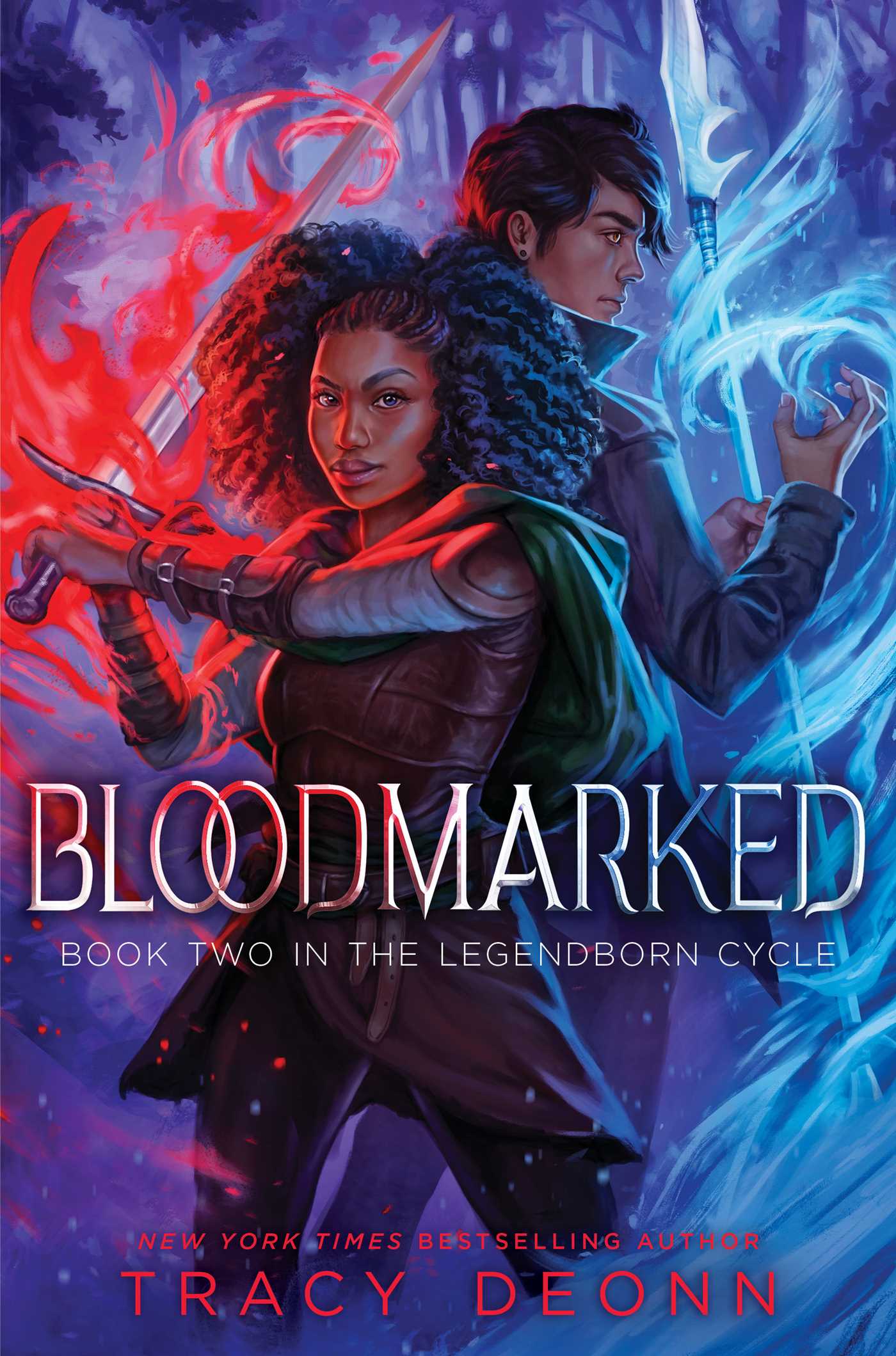
Bloodmarked by Tracy Deonn

    Bloodmarked is a thrilling sequel to Legendborn, following Bree as she continues in her quest. Now recognized as the Scion of Arthur, the Order sees her in a completely different light, needing to protect her and keep her real identity a secret. In addition, she is also the descendant of a powerful root crafter who she can channel through her own abilities, and if anyone else within the Order finds out what she can do, her life will be even more at stake. Untrained and unable to control her powers, she finds herself caught in a web of lies danger, and unrest. All of this while still trying to find out what happened to Nick...

I found this book to be consistent in its tone and prose, and continuing to follow the first person narrative (there's even a surprise near end for how this shift). It was an enjoyable read, and as you keep reading, the tension just keeps sucking you in especially as you continue to see Bree learn, struggle, and grow. I alternated between listening and reading, and both were amazing, so I definitely recommend the audiobook as well.

One key theme I took away from this book was "Autonomy". Bree is surrounded by people telling her what to do, where to go, how to feel, and how to live. What does it feel like to not have any control of your fate? To be surrounded by people constantly making decisions for you; To be given gifts that people tell you over and over are a blessing or a curse, while in the same breath, telling you how you should use them. What does it mean to stand in your truth and live life how you see fit? This is Bree's struggle. 

And by the end of the book, you'll see that life truly warps around us when we finally claim what is rightfully ours. 

- Leo H.

Monday, July 21, 2025

Two Poets - Frank X Walker and Mosab Abu Toha

When I mentioned to coworker Michael - who was putting together a poetry exhibit at the library - that there were a couple of recently published books of poetry that I had found 'harrowing,' he raised an eyebrow at the word I used and suggested reviewing the books here.  

It is an apt word for the poems in these two books. The poems, based on fact, are full of bitter tales of family separation and longing, loss and displacement, and scenes of annihilation of people and places. Coming to terms with the daily threat of death before you have barely had a chance to experience life is an overall theme in each book.

Poets Frank X Walker and Mosab Abu Toha are from ethnic groups whose people have been viewed throughout history as disposable, and while the contexts of these two poetry collections are different in place and time, the themes expressed have such strong parallels that it made sense to review them together. One collection is set in the context of the American Civil War and the other in present day Palestine. 


Walker, a professor of English at the University of Kentucky and a former Poet Laureate of the state, has published 13 books of poetry. His poems often focus on specific historical events. His latest is called Load in Nine Times and draws on actual events while imagining the thoughts and emotions of Black Civil War soldiers and their families. These carefully composed poems give us a view of the horrors endured by men who eagerly signed up for soldiering in the Union army in exchange for the commonly understood expectation of emancipation from slavery for themselves and their wives and children. 

Walker often does many months of research on a historic event before writing a poem about it, and several of the poems in Load in Nine Times imagine the thoughts of real people whose stories he found in archival records. The horrors described take time to emotionally digest, and these poems often left me feeling haunted. The two poems "Unsalted" and "How Salt Works" are about the 1864 massacre by Confederate soldiers at Saltville, Virginia of 46 Black soldiers who had been inadequately armed for battle and then abandoned on a muddy, freezing battlefield by order of their commander after they had been wounded. Other poems describe equally depraved behavior by commanding officers of both armies.

The poems reveal that like so much else in the American story, the military experience was much worse for Blacks than for white soldiers. And yet I was left with the impression that this terrible experience of going into battle with all its terrors and risk was still preferred to remaining enslaved. This series of poems provides such a close look at our gruesome history that the book felt a bit sacred to me once I had finished it; there is deep respect due to the people who suffered these experiences. At the back of the book, a timeline of Civil War developments and turning points plus several pages of notes discussing specific events that inspired some of the poems provide a helpful interpretive context. 


Forest of Noise is a collection of poems by 32-year-old Palestinian writer Mosab Abu Toha. His poems have been published in The New Yorker, The Atlantic, The Nation, The Paris Review, The Los Angeles Review of Books, and many other periodicals. He has won several prizes for his poetry. Like most Gazans, Toha has lost numerous family members, neighbors and lifelong friends who have been killed in the onslaught of retaliation by the Israeli Defense Forces in response to the October 7, 2023 Hamas attack on Israeli civilians. He, too, writes of bereavement, longing and unfathomable destruction of the people and community he has known all his life. So many people are missing from the world he knew that he writes of "Frying pans [that] miss the smell of olive oil. Clotheslines everywhere pine for soap scent," the doorknobs missing the touch of human hands and the ubiquitous rubble where the homes, olive and orange tree groves, and gathering spots of family and friends used to be. Like Walker, Toha brings you right into the immediacy of deep grief and it stings. 

Here are some lines from his poem "Under the Rubble," which I first read in The New Yorker, before I knew who this poet was:


       In Jabalia Camp, a mother collects her daughter's 

       Flesh in a piggy bank, 

       hoping to buy her a plot

       on a river in a faraway land.


       A group of mute people

       were talking sign.

       When a bomb fell, 

       they fell silent.


       The scars on our children's faces

       will look for you.

       Our children's amputated legs

       will run after you.


       He left the house to buy some bread for his kids.

       News of his death made it home,

       but not the bread.


       A father wakes up at night, sees

       the random colors on the walls

       drawn by his four-year-old daughter.


       The colors are about four feet high.

       Next year, they would be five.

       But the painter has died

       in an air strike.


       There are no colors anymore.

       There are no walls. 


       Where should people go? Should they

       build a big ladder and go up?

       But heaven has been blocked by the drones

       and F-16s and the smoke of death. 


...Even our souls,

they get stuck under the rubble for weeks. 


These are important books at a time when American history is being suppressed, erased and deceptively revised, and when the people of Palestine are feeling abandoned by the whole world as the entire population of Gaza continues to be under relentless assault, and profiteers wait for a chance to redevelop the places Palestinians call home. These two collections of poems are treasures. 

- Marianne W.

Wednesday, May 28, 2025

How Fascism Works by Jason Stanley


    People have a tendency to believe that they are immune to fascism. That it would happen abruptly, and we will suddenly find ourselves living in World War II times. On the contrary, it is subtle, with systems changing right before our eyes at a slow and steady pace. That is, until the fascist regime does such a horrendous act that it affects everyone--you--in a way that cannot be ignored. In this book, Stanley discusses what he believes are the ten components of fascism that facilitate these subtle changes by analyzing the commonalities between fascist regimes, their rulers, and their evolutions over time. 

    I enjoyed this book because as I was listening to it, I could find (many) commonalities between the tactics he described in the book and the things I learned while in African American history class. Americans have utilized in-group vs out-group tactics since the beginning of slavery, through Jim Crow, and still even today. It's extremely visible in how the Trump Administration speaks of immigrants, calling them aliens and savages. This language dehumanizes them, goading those who do not wish to critically think into believing immigrants are the enemy. This is then reinforced by news outlets highlighting crimes or other disturbances some immigrants may (or may not) have done, while forgoing all other aspects of immigrants lives and how they contribute to the very country that seems to despise them. This has been happening for years to black people, and now it is also clearly happening to immigrants (and this isn't even the first time).

    I believe the scariest part of reading this book and feeling the parallels is that many of the chapters applied. We watch as our education system gets dismantled, as people are deported for speaking out, and the rich get richer. Even down to the things Trump says, everything can be seen within this book. All of this happening to mold the country into a distorted image of America, and yet we stand divided as ever.

    Despite it all, I enjoy how the book ends on hope built on standing together. Working together is the way forward, as shown throughout history, we just have to find our way there. I think this book offers valuable insight into the current political climate, while also teaching its readers history that should never be forgotten. Please give this book a read. The knowledge you gain can not just open your eyes, but the eyes of anyone you choose to share it with.

- Leo H.

Friday, March 5, 2021

Stamped: Racism, Antiracism, and You by Ibram X. Kendi and Jason Reynolds

Stamped is a non-fiction book that traces racism through the view of history. There’s many political, literary, and philosophical narratives that have been used to justify slavery, oppression, and genocide. The book goes back to the first racist person and slowly leans into the empowerment we all know about. It dives into religious beliefs within each race, type of racists, and well-known moments of racism. Being a book that talks so much about the one thing we avoid the most, this book is more entertaining and formal to the reader.

Jason Reynolds narrates the story in his own words that hooks a reader’s attention. Not only does he capture the slang that his readers talk and know most about, he’s teaching our racial time lapse in a more comedic manner that interests the reader just enough to want to see what’s next. As if we all hopped in a time machine and took a look at how racial pride has been such an issue over the years and reacted in the present time. 

This book is recommended for anyone who wants to find out more about how this mess all started. 

Review written by Devon W.

Modern Herstory by Blair Imani


Are you looking for something to read for Women's History Month, but aren't sure where to start?  Then check out Modern Herstory, an illustrated history by Blair Imani.

Taking an inclusive approach to recent history, this book celebrates seventy women and nonbinary people who have changed the world we live in for the better.  And though all of their contributions were great, the accomplishments of the people in these pages have too often been overlooked.  So Imani's writing and the bold, beautiful illustrations of Monique Le shine a spotlight on the important stories of people who are changing our world right now- and inspire readers to do the same.

I thought that this was a fun, breezy approach to women's history!  It highlights a few familiar people, but also spotlights the stories of many important, but less well known, figures from all backgrounds.  The biographies are all fast and easy reads accessible for all ages, and the art in this book in particular really shines.  If you're looking for a Women's History read, this is one I would definitely recommend!

Friday, February 5, 2021

Stamped from the Beginning by Ibram X. Kendi


Are you looking for some nonfiction to read for Black History Month?  Then you should check out this amazing American history by Ibram X. Kendi.

In this deep history of racism, Kendi takes us through the lives of five major figures from US history to demonstrate how racist ideas have shaped America's past.  From puritan ministers through to modern-day activists, this book shows how people in this country built a nation steeped in racial inequality, how they fought to oppose or maintain that inequality, and how we came to be where we are today.  

This book is a great way to brush up on your history and rethink the stories that we all think we know.  Kendi is a great writer and historian, and the way he uses a few pivotal figures to tell the story of the country makes it all very compelling.  He manages to tell the story of America's history of racism and still come out with a little hope for the future, a feat that I can't help but admire. 

Friday, December 18, 2020

A Promised Land by Barack Obama

 Are you a fan of autobiographies?  Do you follow politics closely?  Then check out Barack Obama's newest book, A Promised Land.

This first volume of Obama's presidential memoirs tells the story of his journey from a young man to the president of the United States.  He takes leaders through his political education, organizing years, and first term in the White House.  Offering thoughtful insights on presidential power, politics, and diplomacy,  this personal and beautifully written book perfectly captures Obama's belief in democracy and progress.

I listened to the audiobook version of this memoir and cannot recommend it highly enough!  Obama takes you through his life and early presidency with good humor and profound understandings, matching warm stories about his family with a deep dive into his work.  Listening to him read all of his thoughts to you definitely improves the experience, though it is a longer audiobook - nearly thirty hours long.  I didn't know going in that this is just the first in a series of his presidential memoirs, so now I'm excited to see what he'll be writing next!