Friday, February 20, 2026
The Correspondent by Virginia Evans
I waited several months to get my turn with this novel after putting in a request at the library in the early Fall; it's been that much in demand since its April 2025 publication. The Correspondent has been called the sleeper hit of 2025.
The novel is structured as a series of letters and emails between protagonist Sybil and a number of people in her personal orbit, as well as a few well known authors she did not know personally including McMurtry and Joan Didion. In the first three quarters of the book there doesn't seem to be much that is remarkable about this woman's life: Though it has its difficulties and profound sorrows, it is also a fortunate and rather insulated life.
Sybil has always loved to write and receive letters. In retirement this inclination sharpens as she begins to devote several mornings a week to correspondence with a number of people. Curiously though, many of her letters ramble on and on with way too much information. The woman should have kept a diary to record some of this stuff rather than pour it so narcissistically into letters. The purpose of this unfiltered tedium of course is to establish who Sybil is, as well as to further the novel's trajectory. Still, I read with skepticism; she seems to lay bare her soul unnecessarily in so many of her letters, as do most of the people who write back to her. She even does this in emails exchanged with a customer service rep, crossing boundaries that eventually get the employee fired. So many of her letters to peripheral acquaintances are full of irrelevant detail. For a letter writer as practiced as Sybil is, this seems odd. Who really does that with everyone they know, whether close or not?
On the other hand the intimate confidences exchanged with her lifelong friend Rosalie who lives in another city are genuine and beautifully expressed, as are letters to and from her brother. I love that she and Rosalie end every letter with "I'm reading [ _________.] What are you reading?"
A lot of people love Sybil. But she isn't likeable. Her daughter doesn't even like her. She comes across as entitled, closed-minded, defensive, thoughtless, pushy - a regular Karen, to use a pejorative label from the current vernacular. When she meets an obstacle, rather than considering others' positions or points of view, she just keeps pushing to get her way. Yet she always does the "correct" thing when a social situation calls for it. She has superficially good manners, but thoughtfulness, sympathy, and empathy are not Sybil's first instincts. I didn't like this woman, yet after a few pages the book started to embed hooks in me such that I looked forward to returning to it each time I had to put it down.
Given these complaints, what hooked me once I'd begun this book? Beautiful prose, for one thing - even in inappropriately rambling letters. And: other people's stories that unfold in ongoing correspondence. Sybil's correspondence is a conduit to some emotionally haunting human interest stories. The Correspondent felt at times like a de facto collection of riveting short stories parsed out bit by bit in the letters Sybil received. These stories-within-a-story kept me plugged in throughout.
Yet toward the end of the book, at last I found Sybil's own story satisfying. In the last decade of her life she begins to soften and open herself up less narcissistically and more genuinely. She becomes likeable - but only after being confronted in various ways with her own rigid, reflexive thoughtlessness and made to see the sometimes devastating effects on others of her decisions and behaviors. Her transition is evident in her writing. After she begins to let down her guard, life gets bigger and very interesting, presenting her with the above referenced miracles.
I suspect each reader won over by The Correspondent connects a bit of their own experience to the emotionally resonant universal themes woven into it. Altogether a satisfying novel worth the wait.
-Marianne W.
Thursday, August 7, 2025
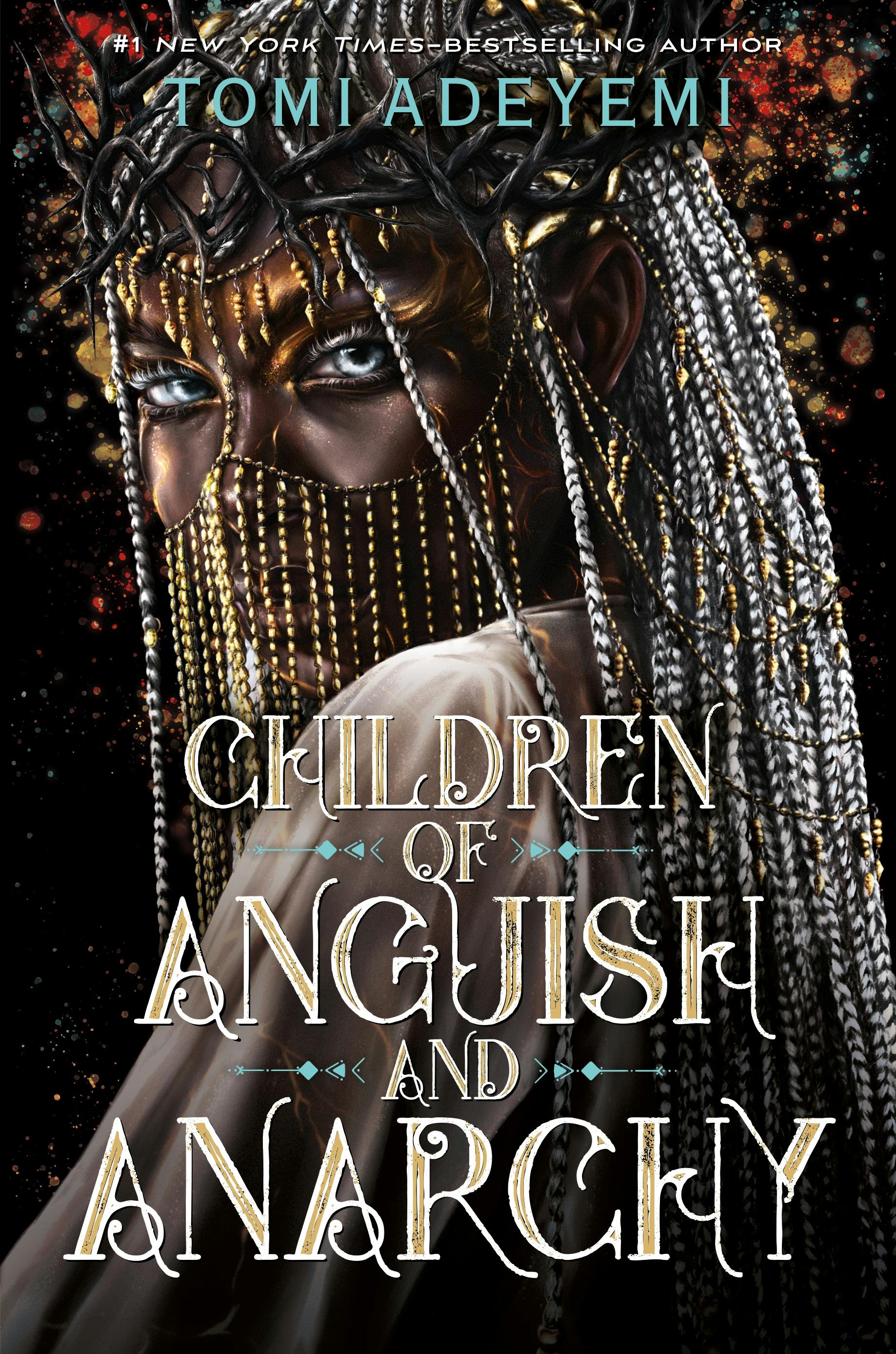
Children of Anguish and Anarchy by Tomi Adeyemi
Monday, July 21, 2025
Two Poets - Frank X Walker and Mosab Abu Toha
When I mentioned to coworker Michael - who was putting together a poetry exhibit at the library - that there were a couple of recently published books of poetry that I had found 'harrowing,' he raised an eyebrow at the word I used and suggested reviewing the books here.
It is an apt word for the poems in these two books. The poems, based on fact, are full of bitter tales of family separation and longing, loss and displacement, and scenes of annihilation of people and places. Coming to terms with the daily threat of death before you have barely had a chance to experience life is an overall theme in each book.
Poets Frank X Walker and Mosab Abu Toha are from ethnic groups whose people have been viewed throughout history as disposable, and while the contexts of these two poetry collections are different in place and time, the themes expressed have such strong parallels that it made sense to review them together. One collection is set in the context of the American Civil War and the other in present day Palestine.
Walker, a professor of English at the University of Kentucky and a former Poet Laureate of the state, has published 13 books of poetry. His poems often focus on specific historical events. His latest is called Load in Nine Times and draws on actual events while imagining the thoughts and emotions of Black Civil War soldiers and their families. These carefully composed poems give us a view of the horrors endured by men who eagerly signed up for soldiering in the Union army in exchange for the commonly understood expectation of emancipation from slavery for themselves and their wives and children.
Walker often does many months of research on a historic event before writing a poem about it, and several of the poems in Load in Nine Times imagine the thoughts of real people whose stories he found in archival records. The horrors described take time to emotionally digest, and these poems often left me feeling haunted. The two poems "Unsalted" and "How Salt Works" are about the 1864 massacre by Confederate soldiers at Saltville, Virginia of 46 Black soldiers who had been inadequately armed for battle and then abandoned on a muddy, freezing battlefield by order of their commander after they had been wounded. Other poems describe equally depraved behavior by commanding officers of both armies.
The poems reveal that like so much else in the American story, the military experience was much worse for Blacks than for white soldiers. And yet I was left with the impression that this terrible experience of going into battle with all its terrors and risk was still preferred to remaining enslaved. This series of poems provides such a close look at our gruesome history that the book felt a bit sacred to me once I had finished it; there is deep respect due to the people who suffered these experiences. At the back of the book, a timeline of Civil War developments and turning points plus several pages of notes discussing specific events that inspired some of the poems provide a helpful interpretive context.
Forest of Noise is a collection of poems by 32-year-old Palestinian writer Mosab Abu Toha. His poems have been published in The New Yorker, The Atlantic, The Nation, The Paris Review, The Los Angeles Review of Books, and many other periodicals. He has won several prizes for his poetry. Like most Gazans, Toha has lost numerous family members, neighbors and lifelong friends who have been killed in the onslaught of retaliation by the Israeli Defense Forces in response to the October 7, 2023 Hamas attack on Israeli civilians. He, too, writes of bereavement, longing and unfathomable destruction of the people and community he has known all his life. So many people are missing from the world he knew that he writes of "Frying pans [that] miss the smell of olive oil. Clotheslines everywhere pine for soap scent," the doorknobs missing the touch of human hands and the ubiquitous rubble where the homes, olive and orange tree groves, and gathering spots of family and friends used to be. Like Walker, Toha brings you right into the immediacy of deep grief and it stings.
Here are some lines from his poem "Under the Rubble," which I first read in The New Yorker, before I knew who this poet was:
In Jabalia Camp, a mother collects her daughter's
Flesh in a piggy bank,
hoping to buy her a plot
on a river in a faraway land.
A group of mute people
were talking sign.
When a bomb fell,
they fell silent.
The scars on our children's faces
will look for you.
Our children's amputated legs
will run after you.
He left the house to buy some bread for his kids.
News of his death made it home,
but not the bread.
A father wakes up at night, sees
the random colors on the walls
drawn by his four-year-old daughter.
The colors are about four feet high.
Next year, they would be five.
But the painter has died
in an air strike.
There are no colors anymore.
There are no walls.
Where should people go? Should they
build a big ladder and go up?
But heaven has been blocked by the drones
and F-16s and the smoke of death.
...Even our souls,
they get stuck under the rubble for weeks.
These are important books at a time when American history is being suppressed, erased and deceptively revised, and when the people of Palestine are feeling abandoned by the whole world as the entire population of Gaza continues to be under relentless assault, and profiteers wait for a chance to redevelop the places Palestinians call home. These two collections of poems are treasures.
- Marianne W.
Thursday, June 26, 2025
The Seep by Chana Porter
After an alien invasion solves the world's problems, Trina's wife wants a fresh start. Specifically, as a baby. She wants to become a literal baby (again).
Wednesday, June 11, 2025
Children of Virtue and Vengeance by Tomi Adeyemi
The words reverberate through the entirety of this story as a lesson learned and a lesson shared.
A continuation of "Blood and Bone", "Virtue and Vengeance" follows Zélie, Amari, and Tzain as the tension of the war in Orïsha continues to rise. The king is now dead, but with the return of magic, there is now the new threat of tîtáns, people who are half kosidán half maji and wield uncontrollable power. The biggest threat of them all, is the queen.
The book continues with its signature shifts in perspective each chapter, continuing to follow Zélie, Amari, and Inan, each following their own beliefs in how they can end the war. As the title suggests, vengeance and grief are large themes in this book. We see the toll war takes on each one of the characters, and how that grief (or their attempts to prevent it) can motivate the characters to do actions that blur the lines of morality.
Family, community, and love. This book explores the lengths we're willing go to protect them.. and to avenge them. As I listened to this story, I was completely immersed in the world and invested in these characters. And now, I'm speeding through the third book! I highly encourage checking out this series, hoping that you will fall in love with it too, just like I have.
- Leo H.
Friday, September 20, 2024
Long Island by Colm Tóibín
There is much duplicity in this captivating novel! It seems as if every main - and most of the minor - characters are deceiving someone close to them. This is not consciously manipulative behavior; these are generally well meaning people.
Colm Toibin's brand new novel - Long Island - is a sequel to his 2009 novel Brooklyn, which was subsequently made into a movie. In this story that takes place in the 1970s, two fishbowl worlds and two cultures are depicted - one in an Irish village, the other a subdivision on Long Island, NY.
Eilis Lacey Fiorello, who in the original novel emigrated to New York City in the 1950s and married into a close, extended Italian family inhabits both of these entrapping worlds. It is her experience around which the larger story develops. A quiet and mostly responsible woman, she has a way of unleashing disruption within her two families, with little insight on the attendant emotional pain she tends to generate.
Tóibín's depiction of the lives in this story brings to mind novels of Edith Wharton in his focus on the dynamic nuances of private, unspoken thoughts that flit between and among people. Characters always seem to be second guessing each other and themselves. There is context to outline the story, while the pace of the novel often slows down. The reader may spend several pages examining the thoughts and suppositions of a character while only a couple of days - or even just a few hours - have passed, and it's riveting. That is one of the gifts of this writer.
All the drama happens at the beginning and the end of the story, leaving an ending I found satisfying even for its ostensible inconclusiveness. You come to see that all the interpersonal manipulation and deceit of this story is, collectively, people's responses to living in a world where everyone knows too much about each other and there is sometimes too little room to breathe or be true to the self. For these deeper themes I found it compelling reading.
Reviewed by Marianne W
Friday, August 16, 2024
Blessings by Chukwuebuka Ibeh
The story revolves around Obiefuna and his journey of self discovery as he grows from a child into a young adult. His life is not without its obstacles, as he discovers quickly he is gay and that his mannerisms are seen as weak and feminine. In Nigeria, these qualities are frowned upon, the roots of their hate deeply ingrained in homophobia. Obiefuna does what any of us would do to survive: he hides these parts of himself.
But one can only hide for so long. His father eventually sends him to a (very rough) boarding school, and it is there where we see many of the books’ events take place. We see Obiefuna’s destruction and evolution, his death and rebirth. There is nothing else to do but adapt when you are thrown to the wolves.
While the story is primarily about Obiefuna, through alternating chapters, we also follow the perspective of his mother, Uzoamaka. We see her deepest inner thoughts as she watches her son change. It is through her that we start to see a different type of love, one that transcends what Obiefuna has always thought he understood.
Told in third person perspective, the book has an elegantly straightforward voice with a serious tone that still allows for laughs and smiles. It draws us into an attachment for the flawed Obiefuna as his understanding of love is consistently challenged. If you’re anything like me, it’ll also pull out some tears.
It's probably my favorite one so far out of the books I read in 2024, so please check out this book. It's a very beautiful example of how sometimes, the very places that challenge us the most can be the very same places that show us the truest possibilities of what love can be.