Showing posts with label Michael G.. Show all posts

Friday, July 10, 2026

Goth by Otsuichi

Goth was added to my TBR at a time when I dreamed I'd live in Japan for a year, reading only Japanese literature. Years later, that aspiration has faded, but Goth remained. 

Side question: Do books ever fall off your TBR until they are read? There is a t-shirt I saw online that briefly tempted me, a skull and a headstone reading "Bury me under my TBR." But enough talk about mortality! 

Through a series of short stories, Goth introduces us to two high schoolers obsessed with true crime. Initially, the stories were released online, and they retain that creepypasta vibe and style of writing, with all the limitations that entails. The writing does improve as the collection goes on and the author matures. 

The narration, like the teens, are detached, even as they encounter increasingly gruesome situations. The book is not for the faint of stomach. In the first story, the kids visit a remote mountain in search of a crime scene -- and find it. Even as they find clues to uncover the murderer, they don't turn them over to the police. They are interested in why and how a criminal commits atrocities, not in justice or preventing future crimes. And as in places where Jessica Fletcher goes, there is plenty of violence for the kids to explore. 

The collection cast a kind of spell over me. The first story involves a disturbing series of murders, but mostly serves to introduce us to our mysterious, unnamed narrator and his classmate Morino. The narrator is outwardly normal, he plays sports and jokes with his classmates, but inside he covets a dark fascination with the macabre. Morino, on the other hand, is outwardly "strange," dressed all in black, she is abrupt with classmates and teachers and completely uninterested in social niceties. In other words, my type. The second story explores the inner mind of a criminal while we learn more about our two central characters. Even though, or perhaps because, it is about a person who cuts off as many hands and paws as he can get away with, this is the silliest story, and I'm not sure if it is always intentional. As here, when the narrator is exploring the criminal's house:

"Each time I left a room, I checked to make sure I hadn't forgotten anything, like my student ID, a uniform button, a textbook, or a sock." 

Student ID I can understand, a uniform button, sure, but already that's weird, but why would he leave behind a textbook? And then: Sock. How would you not notice leaving behind a sock? 

And then later, when the criminal has to go to work knowing that his prized collection of hands has been stolen, he obsesses for half a page over hands and here, the repetition lends humor to the macabre: 

"Hands. Hands. Hands were more important than the other teachers. First, there were hands, and then the human followed. There was no point in talking with the human." 

On the last page, the narrator asks Morino what she would be doing if she had been one of the victims. She considers and replies: "It would be very hard to put on a watch."

However, it is the third story ("Dog") where the collection really kicks into high gear. I would argue this is Otsuichi's best writing in the collection, and from this story on I was captivated. What surprised me was I found it rather moving by the end. I wasn't expecting that at all, given how distant we were from the main characters at the start. 

The collection comes together as a whole towards the end, and what is fascinating is to see that through it all has been planted a surprise that makes sense only at the end. There's a lot more a person educated in Japanese mystery stories could say about this (see: honkaku), but that person isn't me. I will note that I didn't read the afterwards or the bonus story. 

-Michael G. 

Monday, April 13, 2026

I Want to Be a Vase by Julio Torres, illus. by Julian Glander

 With its bold, aspiring statement title, humorously quotidian central figure, and vibrant digital 3D art, I Want to Be a Vase is a fascinating creation. It concerns what happens when a toilet plunger decides one day that it wants to be a vase. Confusion among the other objects in the apartment ensues, with the vacuum cleaner the loudest naysayer. 

The plunger's determination to become its own version of a vase frees other objects to explore more meaningful work: The stove pot wants to hold trash, the mirror wants to be a pillow ("a sharp, breakable, dangerous pillow!"), and the mug wants to be light (just light, not a lamp). 

The vacuum looses its innards over the perceived chaos, but eventually comes around when it realizes that when everyone has a job they are happy with, its own work can be accomplished faster and easier. 

It's a playful, nuanced story about self-actualization. Reading it to a class of children, I found it to be a little wordy and sly, worth really sitting with and exploring its ideas one-on-one, but I was delighted by the children's observations. One normally very sleepy and quiet boy observed of the first three pages (a view of a city at the foot of a mountain range; the city; the window in an apartment building) that what it was doing "was like a movie," which really seemed sophisticated for a five-year-old. At the end of the story, the Book itself tells the reader it would love to be a hat, and so we took turns with the students trying on different looks, which was a really fun way to end story time. 

-Michael G. 

Monday, April 6, 2026

Half His Age by Jennette McCurdy

Seventeen-year-old Waldo realizes on the first day of senior year that what she wants, more than anything, is her forty-year-old creative writing teacher. Her attraction to him is sparked by his honesty, his frank admission of disappointment in the way his life has turned out. It seems so unlike the evasions and defenses of everyone else she knows. His fine lines, his paunch, even his B.O excite her more than the slim bodies, pouty lips, and floppy hair of her previous lovers. Her pursuit of him is relentless. 

Former child actor Jennette McCurdy made waves with her best-selling memoir I'm Glad My Mom Died and Half His Age is her debut novel. By its very premise and aggressive/suggestive cover, it aims to shock and discomfort. 

As soon as I heard about it on the New York Times podcast I placed a hold and once it was available I read it in three sittings over the course of 24 hours. It's bitingly funny, sad, and thrilling. Waldo dispatches love, boys, her absent mother (who hops from man to man pathologically) with swift and merciless humor, and she herself is not immune from her own cynical judgement. Her binge-eating junk food until it hurts ("I've always derived a strange pleasure from the pain of junk food. Icees vacuumed up through a straw in less than a minute so the brain freeze hits hard. Nachos packed with so many pickled jalapenos that my nose runs. Kettle chips heaped into my mouth, my hand a claw excavator, forcing them in as their rugged edges cut my gums.") and filling online carts with fast fashion she knows she'll never wear are cyclical coping mechanisms for the loneliness and disconnect she feels. 

There is something in Waldo that is akin to the (anti-)heroines of Otessa Moshfegh's Eileen and unnamed protagonist of My Year of Rest and Relaxation: Disaffected and lonely, with an intelligence and humor that eviscerates. 

Will Waldo get what she wants? What does she want, really? McCurdy mixes a blend of unhinged and seductive to comic effect, creating a character and a voice full of desire and rage that is completely her own. 

-Michael G. 

Thursday, April 2, 2026

Lost Lambs by Madeline Cash

After Catherine unilaterally decides to open her marriage, the Floyd family descends into chaos, involving multiple over-the-top scandals, each fit for an episode of a zany tv show. 

With its rapid fire wit and colorful characters in a harbor town, this family comedy shares DNA with the cartoon Bob's Burgers. The father fumbles his good intentions, the fabulous mother loves her booze, the daughters are fearless, wacky, and brilliant. There's even a larger-than-life billionaire villain. One of the side characters I loved was "War Crimes Wes," the veteran boyfriend of the eldest daughter who is a staunchly adoring man with no imagination and something like Crohn's Disease, which gives him a pained stoicism everyone immediately respects. Each chapter focuses on the perspective of one character, usually rotating among the family members, but including others, like Wes. 

Though the Floyds share a house, they each live largely separate lives. It is satisfying and lovely to see how they meet up in the end in a patchwork sort of way that affirms what a healthy family looks like. 

-Michael G. 


Monday, January 26, 2026

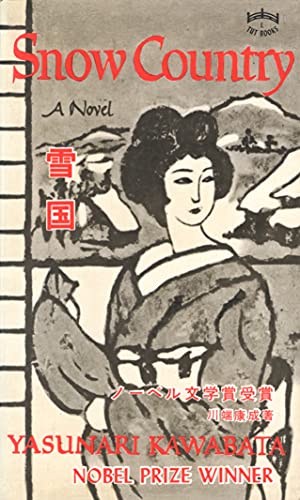
Winter Storm Reads: Our Winter Monster by Dennis Mahoney & Snow Country by Yasunari Kawabata

Since the winter storm is keeping us indoors another day, I thought I'd share two books about snow I've read this month. 

Published a year ago this week, Our Winter Monster by Dennis Mahoney is about a couple whose relationship is on the rocks being terrorized by a swirling mass of snow. Really! 

The story alternates between Brian and Holly present and Brian and Holly a year ago before a traumatic, bloody event that left them both, separately and together, changed. In the present narrative, they take a spontaneous vacation to a ski village but are derailed en route by a snow storm that has the power to yank someone out through a car window.  

We also get chapters from the village sheriff's perspective. Up until recently, Kendra felt confident and content, but then her girlfriend left her, two tourists went missing, and now she feels like a failure, stranded in an interior blizzard. 

Kendra, Brian, and Holly will encounter an unexplainable phenomenon before the night is through. 

This is an enjoyable, non-literary, old-fashioned horror story: It is a fun read that is also about the ways we avoid dealing with traumatic events; it isn't a book about TRAUMA dressed in the loose-fitting garb of a "horror" story. It's well-written but not in a way that distracts from the plot. It's got a sizeable cast of characters and they don't all make it, but at the heart of it is Brian and Holly: Will they survive, and if so, will their relationship make it? 

And now for something completely different! The other wintery book I read was Snow Country by Yasunari Kawabata, translated from the Japanese by Edward G. Seidensticker. Originally published in three parts over the course of ten years, the final version emerged as a whole in 1947. Snow Country is a melancholy winter poem in short novel form, frank and unromantic. 

"Snow country" refers to the mountainous region on the western coast of Japan known for its heavy snowfall, where pleasure-seekers go to ski, enjoy the hot springs, drink sake, and enjoy the company of geishas. Over the course of three visits to a hot spring resort in a remote mountain village, a married Tokyo idler (Shimamura) becomes intimate with a young geisha, Komako. There is no pretense that theirs will be a lasting love affair. Hot spring geishas aren't known for being particularly well-trained in music, dance, or song. 

The writing is absorbing, occasionally transcendently beautiful, lovely and sad. So much reflection on "wasted effort:" beauty and talent existing in a snowbound, uncultured village. When Shimamura is with Komako, he is reminded of his own futile enjoyments (hiking mountains; an intended self-published book on ballet, an art he's never seen nor wants to). In snow country, it is clear that time just passes, with nothing to show for us having been there but perhaps a series of diaries read over only by their writer, or a fine cotton cloth that will long outlive its anonymous creator. 

I hope everyone is safe and warm, cozy with their pets or other loved ones. 

-Michael G. 

Monday, December 15, 2025

The Secret of Ventriloquism by Jon Padgett


As I am looking through my book journal for 2025 and reflecting on my favorite reads, I realized I neglected to share another of my favorites from the year: The Secret of Ventriloquism by Jon Padgett. 

This was my second read in 2025 about ventriloquism and insanity (the first being Magic by William Goldman). R.L. Stine's Night of the Living Dummy did something to my psyche, so I am drawn to stories about malevolent ventriloquist dummies. I found this while browsing a book shop in Maine. The cover is arresting: A black-and-white illustration of a ventriloquist dummy with insectile legs where a torso should be. 

This collection of short stories started off as creepy but "fine" until suddenly, in a story with a self-aware pedestrian style, something unlocked in me and this felt like a sinister puzzle box, every story demanding a re-read after finishing a new one, so that it is a book that could be infinitely read; immersed in, studied, driven mad by. Most of them linger in the realm of the uncanny, and they reward a slow, careful read. 

This experience is an argument for buying weird self-published books you've never heard of! It was the perfect thing to read while I was in high altitude for a horror film festival in October, feeling increasingly paranoid and jumpy. I bought a copy for the library, so hopefully I can find myself another convert to the cult-like appeal of Jon Padgett's Secret

-Michael G. 

Monday, December 8, 2025

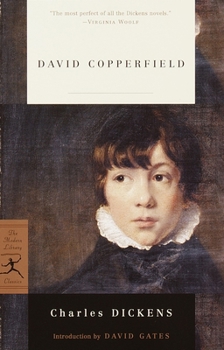
David Copperfield by Charles Dickens


Since my mom taught me to read, we have swapped book recommendations, but over the past few years we've formed a structured book club of two. We've read War and Peace, Don Quixote, The Count of Monte Cristo, and The Lord of the Rings, each over the course of a year. This year I asked to read Charles Dickens, since as a creative writing/English lit major I consider it an embarrassment that I've never read any of his work. I mean, I love The Muppet's Christmas Carol, but it isn't quite the same thing, is it? 

I chose David Copperfield for three reasons: 

1) It's over 800 pages, close to our meaty goal of 1000 pages. 

2) There was a copy taking up significant space on my bookshelf, right next to similarly untouched Bleak House

3) Virginia Woolf's blurb is on the cover calling it "The most perfect of all the Dickens novels." 

I went in prepared to be a little bored. The vague sense I had of Dickens was that he was long-winded, needlessly wordy ("He got paid by the word!" people holler, as if that is deterrent rather than impressive), and moralistic. I also wondered if his books were all about miserable orphan boys who make good through steadfast kindness and surprise rich relations. 

Well, David is at one point a fairly miserable orphan boy and he does make good with the help of a rich relation and his own diligence. But! I was not bored and there were only about two chapters I skimmed because they were so weepy. Occasionally it seemed Dickens popped through the veil of fiction, either through clumsy structure (a scene observed through eaves dropping that tests the limits of human understanding; a character's running commentary cringingly meant to bring humor to melodrama), whiplash character changes, or the semi-frequent interruptions of plot to state some sort of thesis on being hard-working and productive. 

Overall, I was impressed with just how continually entertained I was by the storytelling. The characters are so delightfully drawn, I feel like I will carry them with me much longer than I do others. His aunt Betsey was our hero: At one point I texted my mom: "Janet! Donkeys!" and I imagine that will be a phrase we can call to each other through the years. His villains were delicious: the writhing, unctuous Uriah Heep; steely Miss Murdstone; and my favorite, the fantastically bitter Rosa Dartle. Let me just take a moment for Rosa Dartle. Take this first description of her: 

She was a little dilapidated – like a house – with having been so long to let; yet had, as I have said, an appearance of good looks. Her thinness seemed to be the effect of some wasting fire within her, which found a vent in her gaunt eyes.

When she dispenses with her halting manner of speech and lets forth with the full vent of that "wasting fire within her," I could not put the book down. It was so vicious, so intense, so full of emotion and fury. 

I'm satisfied with my first Dickens experience and at some point will pick up another. Probably Great Expectations, because there's a lady called Haversham I'm looking forward to meeting. 

-Michael G.

Monday, November 10, 2025

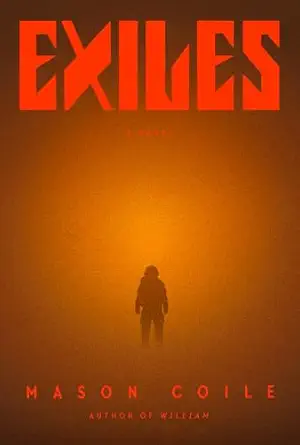
Exiles by Andrew Pyper (writing as Mason Coile)


"I read this in 24 hours," was part of the recommendation I received from a library visitor the other day. Mason Coile's other horror novel about artificial intelligence (W1LL1AM) has been on my list for a few months, but her enthusiasm about Exiles pushed this to the front of the list. 

The plot is simple and terrifying: Astronauts aboard a space shuttle to Mars wake up from deep sleep to learn that something is wrong at their destination. The robots sent ahead of them to build the colony are not responding. But the astronauts' one directive is to continue the mission, so that is what they do as everything continues to go sideways. 

It is a suspenseful, exciting, short novel (just 200 pages). The pace never slackens: It is one thing after another.  Stories set in space are claustrophobic and this is almost unbearably so. Quickly, this book became not just about space and isolation but also about sexism, artificial intelligence, our fragile, brief life. Pyper was a writer who really had a grasp on storytelling and it is a pleasure to read. 

-Michael G. 

Monday, September 29, 2025

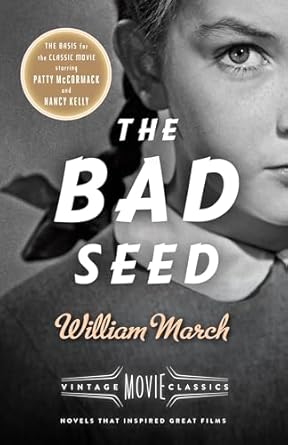
The Bad Seed by William March


William March's Rhoda has seeped into our cultural lexicon, so that like The Stepford Wives or Cujo, you don't need to have read the book (or seen the movie) to know that a well-dressed, polite child wearing formal, old-fashioned clothes is most likely a psychopathic killer. This child doesn't just braid her own hair, she loops them into "hangman's nooses." Her shoes have iron cleats to conveniently transition from outerwear to deadly weapon. You better hope you don't have anything she wants. 

What do you do when this murderous elementary schooler is your kid? March focuses his story on that dilemma. Christine's husband is abroad for work and though she writes him passionate letters full of desperation that verges on the erotic, those are locked in a drawer with other troublesome things like, oh, a loaded gun and a couple bottles of sleeping pills. She only writes him carefully edited letters that keep up the facade that all is well back home. 

The book begins with "the day of her last happiness," but darkness has assiduously followed Christine her entire life, a fact she forcefully tries to deny, despite the encouragement of her neighbor Mrs. Breedlove to delve into every unexamined thought and impulse. 

Speaking of Mrs. Breedlove, she is a fantastic character: a devotee of analysis, an older woman who speaks her mind (constantly!) and bucks convention. Her parties are the best. My favorite is the one where she invites three older ladies to get soused to convince them to fund her new endeavor -- a rehab facility for alcoholics. With Mrs. Breedlove, nothing is off the table. She freely talks about latent homosexuality and incestuous desire, true crime, and what is most fascinating to her: the inner workings of her own mind. But she has a massive blind spot when it comes to Rhoda, whom she just adores. Probably because Rhoda is quiet and well-mannered, the kind of kid adults who don't enjoy children adore. 

Through Mrs. Breedlove's influence, Christine is introduced to the dark and fascinating world of true crime, which she dives into obsessively, like a detective, hoping to find some sort of answer to the riddle of her child's behavior. The deeper she goes, the more unsettled she becomes, and finally, decisive action can not be avoided. It's a pretty good read! I'm looking forward to re-watching the movie. 

- Michael G.

Friday, August 22, 2025

Tilt by Emma Pattee


The novel I have been recommending to everyone recently is Emma Pattee's Tilt. As with Headshot, it was recommended on The New York Times book review podcast episode on Mrs. Dalloway. The individual who recommended it described the plot as if Mrs. Dalloway went out "to buy the flowers herself" but then a massive earthquake devastated London and she had to walk home through the ruins. 

Annie is extremely pregnant and in IKEA looking for a crib when an enormous earthquake strikes. In the destruction, she loses her purse with her car keys and cell phone. She sets off to walk into the city of Portland where she hopes to reunite with her husband at his job. 

The chapters alternate between the present moment and the past, as Annie copes with the stress by narrating the events to her unborn child, who she calls "Bean."  Annie was a promising playwright but what with necessities like rent and health insurance she has hedged herself into a life of Excel spreadsheets and planning office lunches. Her attitude towards her first (and only) play has soured, but her voice is sharp and funny, and by the end of the book I felt close to Annie and wanted her to write another play. 

Pattee is a climate journalist and wanted to write a novel that was fairly realistic about what will happen when the Cascadia earthquake hits the west coast. But Tilt is more than a disaster novel, it's a novel about the ambivalence between loving what you have and still wanting more. 

- Michael G. 

Wednesday, July 16, 2025

Headshot by Rita Bullwinkel


Eight young women gather in a bare-bones boxing gym in Reno, Nevada to compete for the title of best teen girl boxer in America. There are seven matches. During each match, we alternate between the minds of the two competing girls, slamming from one to the other, but also flitting into the minds of the viewers. Time isn't linear, either, and we get glimpses of their futures (without revealing the outcome of the match). 

The energy is like heat coming off the page and I read this in a frenzied two days. Each character is specific and heart-breaking in their own way. Bullwinkel anchors them with phrases that repeat like a leitmotif, reminding you this is the character that never left her home town, this is the character who had a kid die while she was on duty as a lifeguard, this is the girl who has a "weird hat philosophy." 

Bullwinkel's narrative is kinetic and she has a gift for describing what it is to be embodied. I had so much respect for the young women these characters represented: women who are dedicated to a craft, devoted to challenging themselves, regardless of whether or not they are being watched. 

This was recommended on the New York Times book review podcast on the episode where they discuss the 100th anniversary of the publication of (my favorite novel) Virginia Woolf's Mrs. Dalloway. The guests were asked to recommend books to read after the experimental stream-of-consciousness narrative of Mrs. Dalloway. Both books are currently on the shelf at our library. I encourage you to check them out! 

-Michael G.

Thursday, June 26, 2025

The Seep by Chana Porter


After an alien invasion solves the world's problems, Trina's wife wants a fresh start. Specifically, as a baby. She wants to become a literal baby (again). 

Anything is possible in the new world that has been fully infiltrated by "the Seep," an amorphous consciousness that is willing to give us ANYTHING so that it can learn about being human. What its end goal is we don't know, but since the invasion everyone seems happier, healthier and...mildly stoned. It's like the whole world has become a utopian Portland: "But just then, a herd of deer clipped down the street, followed by a topless unicycle collective."

Post-Seep, your body can look however you want. Identity is fluid. Body modification is taken to new heights: It's easy, painless, and nothing is permanent. Want horns? You got 'em. Want to live as a woman sometimes, but not always? Sure thing. Like Trina's wife, you can even transform into a baby. No problem! Except for the grieving spouse you leave behind. 

Wrecked by grief, Trina leaves their home, struggling to find her footing in her new, upended world. And no one seems to understand her unhappiness. Everything is easy with the Seep! What is there to complain about? 

Trina bucks against this queasy utopia, but it is difficult to rationalize, like when she is confronted with the neglect of her house. A volunteer offers assistance, and then makes clear that if she continues to do nothing, she will be removed from her home: "This place isn't yours to let rot. It's an asset for the community. It was built by the energies of many different life-forms, including the trees that gave their lives for its construction, the animals that gave up their homes so yours could be built here." He's got a point, and her wallowing is difficult to justify against the larger argument of communal responsibility, but also: How would you cope if your spouse ended their life in order to start again? 

Amidst the easy solutions offered by the Seep, she clings to what makes her hurt; she is uncomfortable with the placidity and gentleness that are the new norm. Sometimes we want what is bad for us and sometimes, we want to remember and hold onto pain. Trina holds on to her identity as a trans woman. Her body and her history is what makes her her. "[She] had labored for this body! She'd fought and kicked and clawed to have her insides match her outsides." Our struggles, our pain, our sometimes difficult journeys are what make us human. 

What kept striking me was the prescience of Porter's Seep (published in 2020) -- its voice is uncannily like the now ubiquitous AI we see all over the internet, with its chummy but alien helpfulness and cheery exclamation marks ("So, Your True Love Has Become a Baby"). At under 200 pages, The Seep is a great example of how to create a compelling world and space for ideas in a short novel. 

-Michael G. 

Tuesday, June 3, 2025

Glinda of Oz by L. Frank Baum

 In his final Oz book, Baum gives us enormous spiders, a mechanized sinking island led by a tween tyrant, and silent Mist Maidens. Each chapter of Baum's Oz books has been a fresh, light surprise. The stories are so easily entertaining, and definitely not without some thrills. 

The edition I read came with an illuminating introduction and annotations by Jack Zipes, who puts things in context of the (much larger) whole of Baum's work, giving testament to the man's imagination and productivity. 

Baum allowed the rules of Oz to change, but didn't forget to acknowledge that or make his characters reflect upon it. For example, the use of magic in Oz is strictly limited to the Supreme Ruler Ozma, the Sorceress Glinda, and later to the Wizard (who is brought back to Oz and favor after his flight in the first novel). 

When Ozma learns that there are warring tribes in the North using magic, she and Dorothy journey to put an end to both offenses. However, once there, they find themselves trapped. 

This is one of the central fascinations of Glinda: its focus on the limitations of ability and power. Even the Supreme Ruler can become stuck, not knowing how to escape a situation, and what's more, the most powerful Sorceress doesn't know how to save her. But with help, study, experimentation, patience, and a hopeful outlook (plus an unexpected coincidence), things can work out for the good. 

-Michael G. 

Tuesday, May 6, 2025

Baby Teeth by Zoje Stage


Hanna and Suzette are at odds, jealous over each other's relationship to Alex. Hanna decides the only feasible outcome is to eliminate the competition. Their story unfolds in alternating chapters, building to a fiery Walpurgisnacht and its sputtering aftermath. 

Hanna is seven and Suzette and Alex are her parents. 

It's a pretty wildly uneven book and to be honest, I hated it most of the time. Suzette and Alex are so bland and self-absorbed I couldn't tell if they were intentionally satirical or not. Suzette's main characteristics are obsessive cleaning and Crohn's Disease and really, mainly Crohn's Disease. It is a surprise just how much Crohn's Disease can define a character. Alex is Hot Swedish Gym Daddy. Too much of the tension relied on will Suzette be smart enough to record her daughter's bizarre outbursts? And will Alex ever stop explosively and irrationally defending his "lilla gumman"? 

All of this would be slightly more bearable if Hanna were an entertaining, well-written, compelling character. But there's hardly consistency with her voice: She has an adult's intelligence and vocabulary but occasionally uses babytalk and is astoundingly stupid. I thought the book might at least be silly and fun after Hanna punches a toddler at Trader Joe's, but it doesn't get fun for a long time after that. Hanna pretends to be possessed by a witch, makes a heinous collage, and incites a special needs boy to bash his head against a wall and Alex still won't acknowledge all is not right in their sunlit eco-friendly dream home. 

What will be the limit? Maybe I'll leave that to you to discover if you decide to give it a go. I will say, the ending held a surprise for me that I enjoyed but didn't make the overall reading experience much better. 

For a more claustrophobic and horrifying story that has similar themes, I recommend The Push by Audrey Audrain. 

- Michael G. 

Tuesday, April 22, 2025

The Wolf Man by Philip J. Reed


I am so excited about a small Missouri press called DieDie Books! Currently they offer four titles (with one upcoming) that are each a deep-dive into one horror movie by a single author. 

I love that concept. I love to hear or read someone who is passionate about something (especially books and movies!). And these books are very pretty white-and-black volumes with original cover artwork. The one that I was drawn to was The Wolf Man, the movie which strikes me as the sensitive boy's favorite of the Universal Studios monsters. 

The werewolf as a monster is rich with symbolism, but Reed helped me see that the appeal of this movie has a lot to do with Lon Chaney, Jr. as the awkward, doomed main character Larry Talbot. He has zero chemistry with the lead actress Evelyn Ankers and a complex relationship with his estranged father. They are bound by love but find each other impossible to understand. Larry can never match his father's hopes and expectations or integrate into his society. 

Reed absolutely loves the tension between the script and what the actors bring to life (for example, with any other cast Ankers would be playing his love interest), all centered around the tragic, doomed lead actor. Reed sees so much pathos in Lon Chaney, Jr. and this book is actually more of a deeply felt meditation on the man through the lens of The Wolf Man

It's so raw and emotional, in fact, I was sometimes taken aback, a little embarrassed. That feeling made so much sense when I got to the afterward and read that Reed died by suicide before finishing the final edits. Those gaps in polish -- a repeated phrase here, pages of obsessively repetitive sentence structure (like that bird that got into the Library the other weekend, bashing itself against the glass, sensing what it needed but unable to reach it), were evidence of a man becoming undone. And so this book is a portrait of existential despair through the prism of Lon Chaney, Jr, through the reflection of The Wolf Man

It's heavy, amazing, intense. 

-Michael G. 

Thursday, April 3, 2025

The Emerald City of Oz by L. Frank Baum


Last night, right before the tornado sirens went off, Leo and I were at the circulation desk joking about him being whisked off to Oz. 

"But would you come back?" I asked him, because that's the thing about The Wizard of Oz that always troubled me. Why, when Oz is so wonderful, would Dorothy choose to return to dusty old sepia-toned Kansas? 

Because of Aunt Em and Uncle Henry. But in The Emerald City of Oz, which Baum intended to be his final Oz book (it wasn't), their farm is in foreclosure and Aunt Em and Uncle Henry are about to be homeless. Things are looking dire. 

Thankfully, Dorothy's generosity, honesty, and courage has made her friends in high places, and the ruler of Oz relocates the trio to Oz. I loved this, and enjoyed Henry and Em's reactions to the weird and silly Oz (especially the mutual animosity between Aunt Em and the Yellow Hen Billina). Dorothy takes them on a tour of Oz, encountering many strange creatures, my favorite adventure being the visit to the edible village of Bunbury that ends in absolute disaster when Toto devours several citizens and Billina pecks the raisin eye out of another. Dorothy shows sauce but leaves meekly when threatened with "the ovens." 

Meanwhile, various frightening monster tribes amass outside of Oz with bloodthirsty plans to pillage and enslave. The Whimsies with their huge fake heads sound creepy, but somehow their illustration by John R. Neill is even scarier. His illustrations haunt the pages, often difficult to make out, crowded with maniacal figures that evoke the thrills and strangeness of Oz. 

It was funny, sweet, and even a little exciting. If you need a break from this reality, I recommend this escape to the utopia of Oz. 

Monday, March 10, 2025

Witchcraft for Wayward Girls by Grady Hendrix


Grady Hendrix has a new book out and it is, as I would expect, great. If there is a contemporary author I can count on for a good time, it's him.

Set in the early seventies, it takes place in an old Southern manse that has been converted into a discreet Home for unwed mothers. Our main character is renamed "Fern" upon admittance to strict Miss Wellwood's Home. Since having a child out of wedlock is considered shameful and their families don't want them to be considered "loose," "bad," "neurotic," or in a word, wayward, the young women are forbidden from providing personal information that would give away their identities. Still, they connect over astrological signs, birth stories, and complaints about the bland food. One of the true horrors is reading about the seventies cuisine:

"Salads were always on the table[...]"

 -- so far, so good, but it continues: 

"[...] hot dog salad, tuna mushroom salad, cooked cabbage with a can of Campbell's cheddar cheese soup poured on top." 

That last one is a crime against humanity. 

Aside from indigestion, Witchcraft is comparatively light on scares. Fern and her new friends visit the library bookmobile, where the kindly librarian introduces them to How to be a Groovy Witch. From this old paperback they are introduced to concepts of witchcraft, which allow them a way to fight against the constraints of Wellwood's Home but also entwine them with powerful forces beyond their comprehension. 

The power of libraries! 


-Michael G. 

Thursday, January 30, 2025

Nightwatching by Tracy Sierra


A woman is awake in the middle of the night. It is just her and her children in their home. She hears a thud. She knows every creak of every board and that sound came from where a tall person would bump their head coming up the stairs if they don't know the house well. They aren't alone. 

Nightwatching is the stuff of nightmares, and the first 150 pages are incredibly taut with suspense. Sierra alternates between short chapters of present tense and flashback, and I never felt that the flashback sequences detracted from the plot. Chapter by chapter, she is building a story not just of a home invasion, but what it is like to be a woman not believed. 

Then the narrative really sinks into that theme, to a degree that slows down the plot and my interest wavered. It became repetitive. The final third of the book picks up in action, delivering a climax the reader wants. 

It is a very neatly constructed thriller, worth it for the first 150 pages alone. I read it in just a couple of sittings over the course of two days. 

- Michael G. 

Saturday, January 25, 2025

Harvest Home by Thomas Tryon


A painter, his wife, and their teenage daughter move out to the country for a new start, landing in the idyllic New England village of Cornwall Coombe. After a summer restoring their 300-year home and getting to know their neighbors, it's time for the harvest festival! But what it entails is more than square dancing and a husking bee, and much more serious...

In folk horror, you usually have a naive outsider, like Ned Constantine and his family in Harvest Home, entering a rural setting and encountering the superstitions of the people that live in that isolated place. It's usually a beautiful setting, with a strong sense of community and tradition. What seem like remnants of a bygone era, like folk songs, dances, and symbols, are seen as eccentric. And there's a comforting draw to all of this, at first. Isn't it nice, isn't it quaint, isn't it good to be so connected to nature? Yes, the nearest hospital is pretty far, but Widow Fortune seems to have an herbal remedy for anything that ails ya (including asthma). It seems like a good place to bring up your children. Fresh air! Horseback riding! Polite youngsters who value hard work! Hallucinogenic mead!? Secret rituals in the woods!?!

But if you don't fully respect the old ways, look out! Dread builds as conflict increases between modernity and the surviving pagan practices. What you thought was dead and gone is actually alive and well, and it is not going anywhere. 

-Michael G. 


Friday, December 13, 2024

Binocular Vision by Edith Pearlman


My mom and I read the Best American Short Stories edition from 2006 together this year. While they were all excellent, one called "Self-Reliance" stood out. It was by an author neither of us had read before: Edith Pearlman. In this exquisitely nuanced story, a woman faces death head on. It is the gorgeous kind of story my mother felt compelled to share among our family like a particularly virulent cold. 

It was so good we had to read more, so the rest of the year we've spent reading Pearlman's short story collection Binocular Vision, indulging ourselves with one or two stories a week like literary bon bons. Each story is unique, holding within it some nugget of surprise. Another surprise: There's only one available copy in the MLC and it lives right here in Ferguson. 

Pearlman is an observer and fabricator of human interiors. Her focus is contained: Individuals living mostly quiet, regular lives. Sure, there's an attempted kidnapping, but generally nothing very splashy occurs outside of a little incest, shoplifting seniors, and extramarital affairs (both consummated and not). How do people live? What choices make a life, and importantly, how do we relate to other people? How can you explain the fire that billows up from a spark between two strangers? These are the questions she keeps asking. 

There is frequently a tension between the comfort of self-reliance with its imagined security, and the complicated, unexpected messiness of bonding. "How satisfying domestic life was," thinks a retired bachelor, "When you could shut the door on it at the end of the evening and cross the hall and then shut a second door, your own." 

A nanny with a past agrees: "What she wanted [...] was a life alone, with a family at fingertip distance." Not necessarily her family, but a family. Pearlman depicts plenty of loving biological families but also the beauty of "chosen family." The people we're drawn to don't always make sense: the aforementioned bachelor and a fierce teen immigrant; a bureaucrat and an artist; an innkeeper and a diplomat's child. 

Regardless of how they bond, Pearlman's characters are united by their need for connection.

-Michael G.